
Finding Safe Oral Sedation and Gentle Dental Care in Your Area
How to Find the Best Sedation Dentist Near Me
Finding the best sedation dentist near me starts with safety and fit, not just a high review score. Check the dentist's license and any sedation permits required in Florida. Ask which sedation options suit your health and treatment, how the team monitors you, and what your total cost and ride-home needs will be.
Sedation can make care feel more manageable if fear, a strong gag reflex, or a long procedure has kept you from treatment. A consultation is the right time to discuss those concerns, especially if you are considering implants or other work to replace missing teeth.
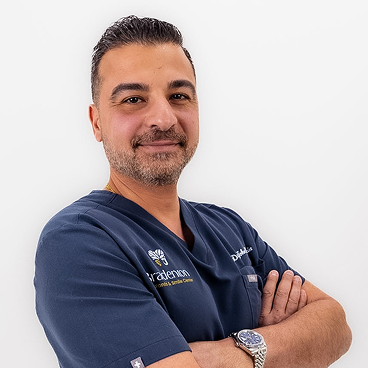
I'm Dr. John Hegazin, owner of Bradenton Implants & Smile Center, with more than eight years of experience in patient-centered dental care, including implant treatment and sedation options. When patients ask how to find the best sedation dentist near me, I encourage them to look for a clear plan that puts their health and comfort first.
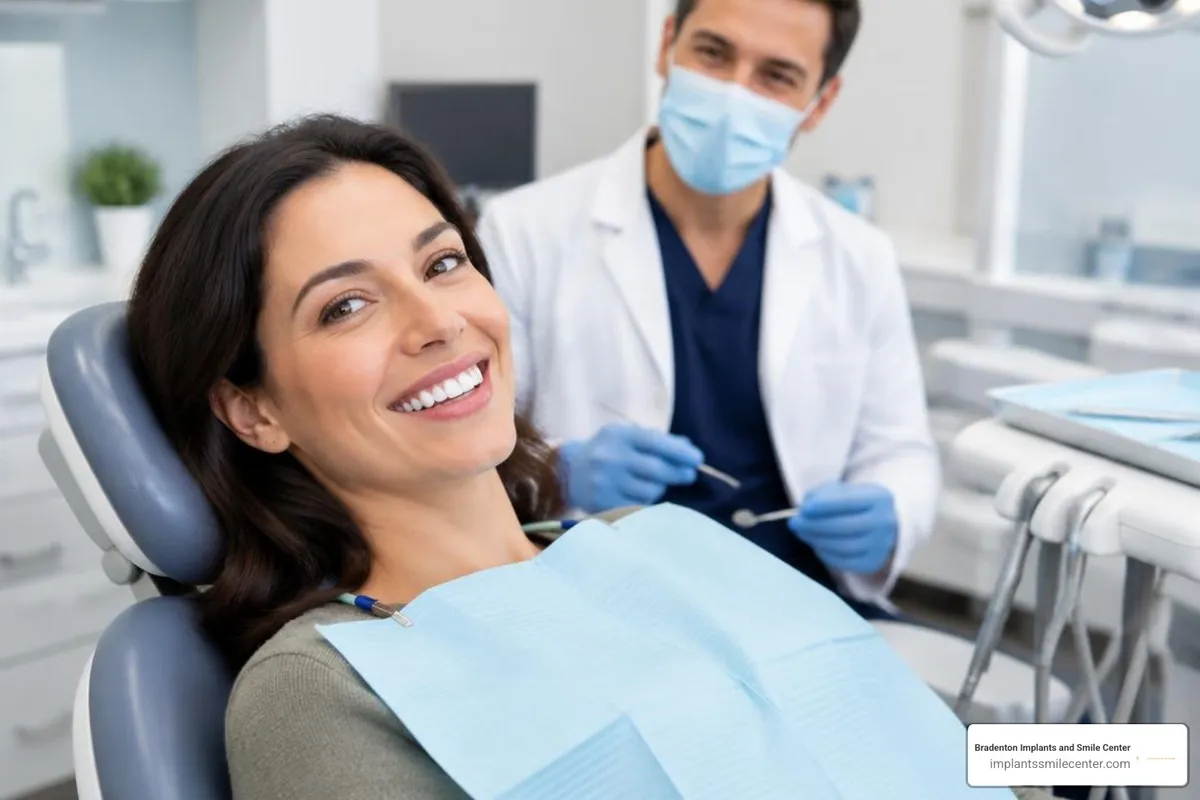
Research shows that as many as 30 percent of adults avoid regular dental visits due to dental anxiety, needle phobia, or past traumatic experiences. Postponing care allows minor issues to develop into complex oral health problems. Modern sedation options allow you to receive comprehensive treatment in a calm, stress-free environment.
What Is Sedation Dentistry and How Does It Work?
Sedation dentistry uses carefully administered medications to help patients relax during dental procedures. These medications work by slowing down specific activity within the central nervous system, which significantly reduces anxiety and raises your overall pain threshold.
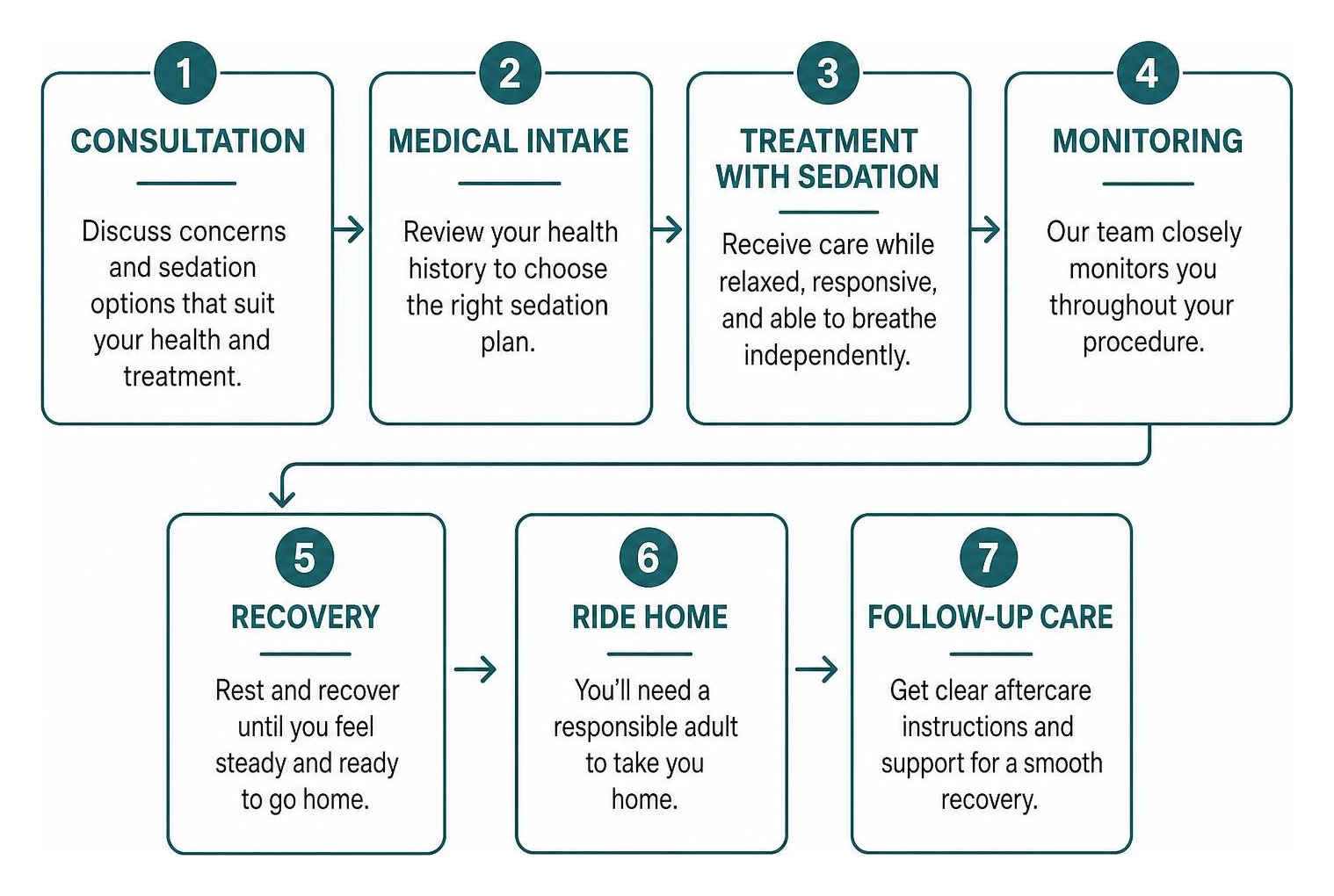
Many people confuse sedation with general anesthesia. In most dental settings, sedation produces a conscious state where you remain awake, responsive to verbal instructions, and able to breathe independently, yet completely at ease. Our practice uses advanced sedation dentistry techniques to tailor this relaxation to each patient's clinical needs.
Inhaled Minimal Sedation (Nitrous Oxide)
Commonly known as "laughing gas," nitrous oxide is an inhaled mixture of gas and oxygen delivered through a small mask placed over your nose. It is one of the most widely used methods for mild dental anxiety:
Rapid Onset: It takes effect within 3 to 5 minutes, creating a light, relaxed, and sometimes floating sensation.
Adjustable Levels: We can adjust the concentration instantly throughout your appointment to ensure your comfort.
Quick Recovery: Once the gas is turned off and pure oxygen is administered, the effects dissipate in about 15 to 30 minutes, allowing you to safely drive yourself home.
Oral Conscious Sedation
Oral conscious sedation involves taking a prescribed medication—such as triazolam or diazepam—about an hour before your scheduled appointment. This option is ideal for moderate anxiety and longer restorative treatments:
Twilight State: You remain awake and capable of responding to questions, but you enter a deeply tranquil, drowsy state.
Amnesia Effect: Most patients remember very little to nothing about the sounds, smells, or details of their procedure.
Escort Needed: Because oral sedatives remain in your system for several hours, you will need a trusted friend or family member to drive you to and from the clinic.
Patients can also combine sedation with other supportive dental anxiety solutions to ensure a smooth, comfortable appointment.
IV Sedation and General Anesthesia
Intravenous (IV) conscious sedation delivers sedative medications directly into your bloodstream through a small catheter. This method provides the deepest level of conscious relaxation:
Instant Control: The dental team or attending dentist anesthesiologist can adjust your dosage instantly throughout the appointment.
Extensive Treatments: It allows multiple complex procedures—such as full-arch reconstructions or multiple extractions—to be completed in a single session.
General Anesthesia: For specialized hospital-grade day surgeries or specific medical needs, general anesthesia renders patients fully unconscious and is managed by an anesthesiologist.
How to Choose the Best Sedation Dentist Near Me
Selecting the right provider involves evaluating clinical standards, technology, and emergency preparedness.

Essential Credentials and Safety Protocols for the Best Sedation Dentist Near Me
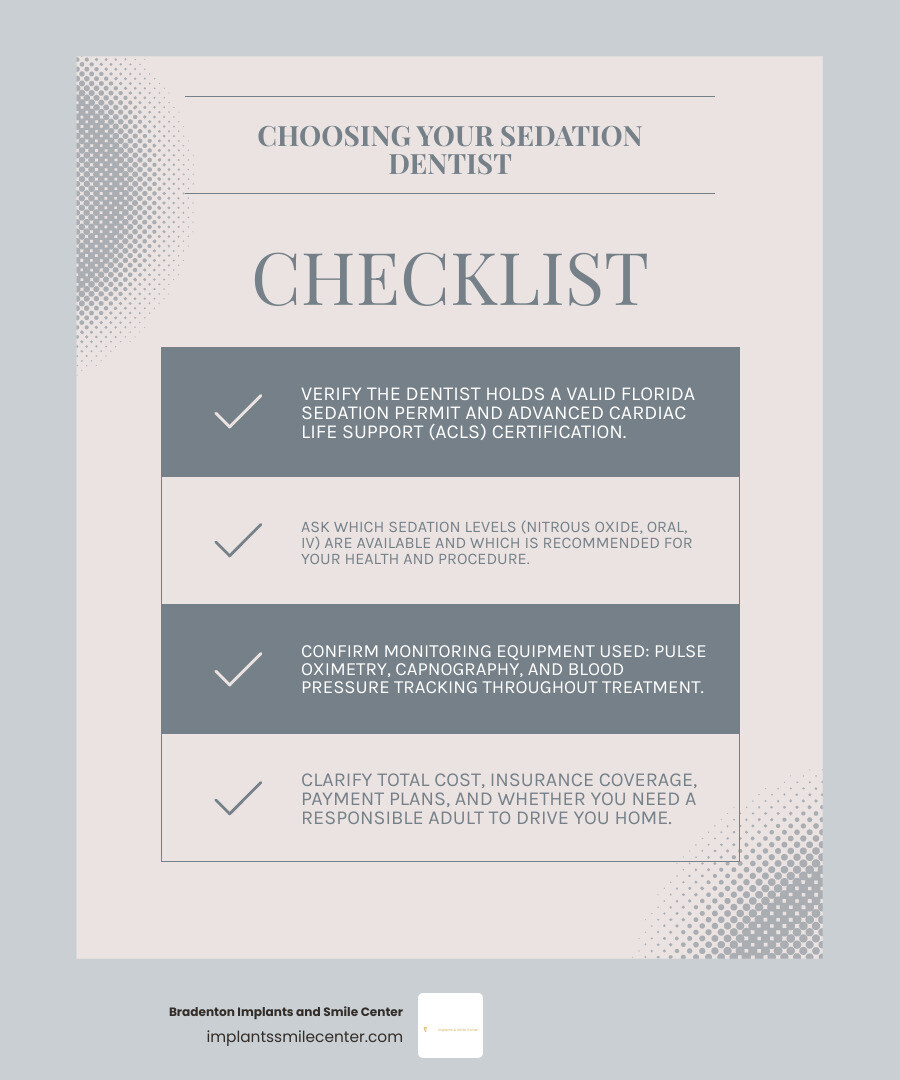
When searching for a qualified sedation provider in your community, focus on these critical safety benchmarks:
Permits and Training: Confirm that the practitioner holds active Florida state sedation permits and advanced life support certifications (such as ACLS and BLS).
Continuous Monitoring Equipment: The operatory must be equipped with hospital-grade monitors to track pulse oximetry (oxygen saturation), capnography (respiratory rate), blood pressure, and heart rhythm continuously.
Thorough Medical Intake: A dependable provider always conducts a detailed review of your medical history, prescription medications, allergies, and underlying conditions (such as sleep apnea or cardiovascular health) before prescribing sedatives.
Emergency Readiness: The practice must maintain immediate access to emergency reversal agents and emergency protocols.
Technology, Patient Comfort, and What to Expect During Treatment
A patient-centered practice combines sedation with modern amenities to create a gentle, welcoming atmosphere:
Comfort Amenities: Noise-canceling headphones, warm blankets, and ergonomic chairs help eliminate sensory triggers.
Clear Preparation: You will receive clear fasting guidelines (typically avoiding food or liquids for several hours prior to oral or IV sedation) and medication instructions.
Detailed Post-Operative Instructions: Your caregiver will receive written guidance regarding rest, hydration, diet, and recovery expectations.
Who Benefits Most from Dental Sedation Options?
Sedation dentistry makes modern oral healthcare accessible to individuals who might otherwise avoid the chair.

Sedation is particularly effective for patients with:
Moderate to severe dental fear or needle phobia.
A hypersensitive gag reflex that makes standard dental work uncomfortable.
Low pain thresholds or teeth that are difficult to numb with local anesthetic alone.
Physical limitations or neck and back issues that make sitting still for extended periods difficult.
The need for multiple procedures consolidated into fewer appointments.
Finding the Best Sedation Dentist Near Me for Complex Procedures and Implants
Sedation allows our team to perform complex dental procedures while you rest in total comfort. For example, patients undergoing full-arch restorations often choose IV sedation for dental implants to make surgical appointments effortless.
Sedation is routinely used for:
Dental Implants: Sedative medications help deliver a pain-free implant procedure that streamlines healing.
Endodontic Therapy: Sedation ensures completely stress-free root canals, even for inflamed teeth.
Surgical Extractions: Wisdom teeth removal and bone grafting can be completed smoothly in a single visit.
Solutions for Severe Dental Anxiety, Sensitive Gag Reflexes, and Special Needs
For patients with high sensory sensitivities, severe gag reflexes, or adult special needs, dental appointments can trigger intense distress. Sedation relaxes muscle responses, suppresses the gag reflex, and calms the autonomic nervous system. This creates a safe setting where your dentist can work carefully and efficiently.
Comparing Sedation Dentistry Types, Recovery Times, and Costs
Understanding the differences between sedation modalities helps you make the right choice for your treatment plan and budget:
Sedation Modality | Sedation Depth | Ideal For | Typical Recovery Time | Average Cost Range (Out-of-Pocket) | Driving Permitted? |
|---|---|---|---|---|---|
Nitrous Oxide | Minimal (Conscious) | Mild anxiety, cleanings, short procedures | 15–30 minutes | $80 – $180 per visit | Yes, immediately after |
Oral Conscious | Moderate (Twilight) | Moderate anxiety, single-session restorations | Up to 24 hours | $150 – $350 per visit | No (Escort required) |
IV Sedation | Moderate to Deep | Severe anxiety, implants, oral surgery | Up to 24 hours | $400 – $800+ per session | No (Escort required) |
General Anesthesia | Complete Unconsciousness | Hospital day-surgery, complex medical needs | 24–48 hours | $1,200 – $2,500+ | No (Escort required) |
Note: Costs vary based on procedural duration, geographic location, and medical requirements. Many dental insurance policies consider sedation an elective comfort benefit, though coverage may apply when specific medical necessity criteria are met. Flexible financing options and in-office payment plans can help make sedation care manageable.
Frequently Asked Questions About Sedation Dentistry
Will I feel any pain or remember the procedure under dental sedation?
No, you will not feel pain during your treatment. Sedation medications are always paired with local anesthetics to completely numb the treatment area. Sedatives also provide an "anterograde amnesia" effect, meaning that while you can respond to your dentist during the appointment, you will likely remember very little of the sights, sounds, or sensations afterward.
Can I drive myself home after receiving oral or IV sedation?
No. If you receive oral conscious sedation or IV sedation, you must have a responsible adult escort you to the office, remain during your procedure, drive you home, and monitor you for several hours. These medications cause lingering drowsiness and impair motor reflexes for up to 24 hours. Nitrous oxide is the only sedation method that clears your system quickly enough (within 15 to 30 minutes) to allow you to drive yourself home.
How much does sedation dentistry cost and does insurance cover it?
Out-of-pocket costs depend on the type of sedation:
Nitrous oxide typically ranges from $80 to $180.
Oral conscious sedation ranges from $150 to $350.
IV sedation ranges from $400 to $800 or more per session.
Standard dental insurance plans often view sedation as an elective service unless treating complex surgical cases, severe physical disabilities, or documented medical conditions. Our administrative team works directly with your insurance provider to maximize benefits and provides third-party financing options to keep your care accessible.
Conclusion
Avoiding dental care due to fear or past discomfort should never stand between you and a healthy, functional smile. With today's advanced, gentle sedation options, you can complete needed cleanings, crowns, root canals, or implant surgeries in complete comfort.
If you are ready to experience anxiety-free dental care, schedule a personalized consultation for sedation dentistry in Bradenton, FL. At Bradenton Implants & Smile Center, our team at 7270 55th Ave E, Bradenton, FL 34203 is dedicated to providing gentle, compassionate, and modern care tailored entirely to your comfort. Contact us today to start your journey toward a renewed, confident smile.