
The Drool-Proof Guide to Eating with a Numb Mouth
Why You Should Never Eat When Your Mouth Is Numb From the Dentist
Can you eat when your mouth is numb from the dentist? The short answer: it's technically possible, but dentists strongly recommend you wait until the numbness is completely gone.
Here's a quick overview of what you need to know:
Question | Quick Answer |
|---|---|
Can you eat while numb? | Not recommended — wait until full sensation returns |
When is it safe to eat after a filling? | Usually 1–2 hours after the procedure |
When is it safe after an extraction? | Wait at least 24 hours for solid foods |
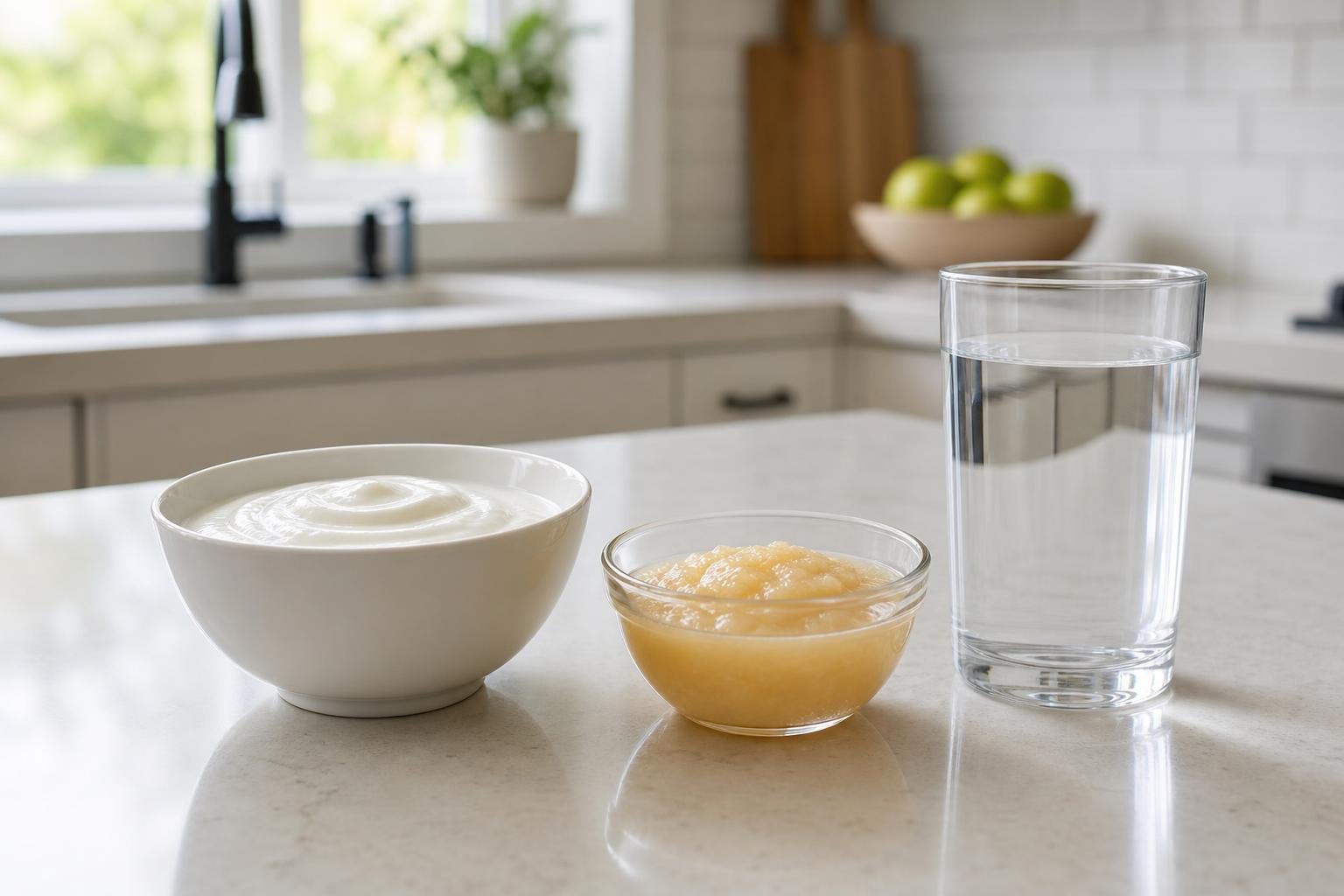
What can you eat while waiting? | Yogurt, applesauce, smoothies, lukewarm water |
Biggest risks of eating while numb? | Biting your lip, tongue burns, choking, damaging dental work |
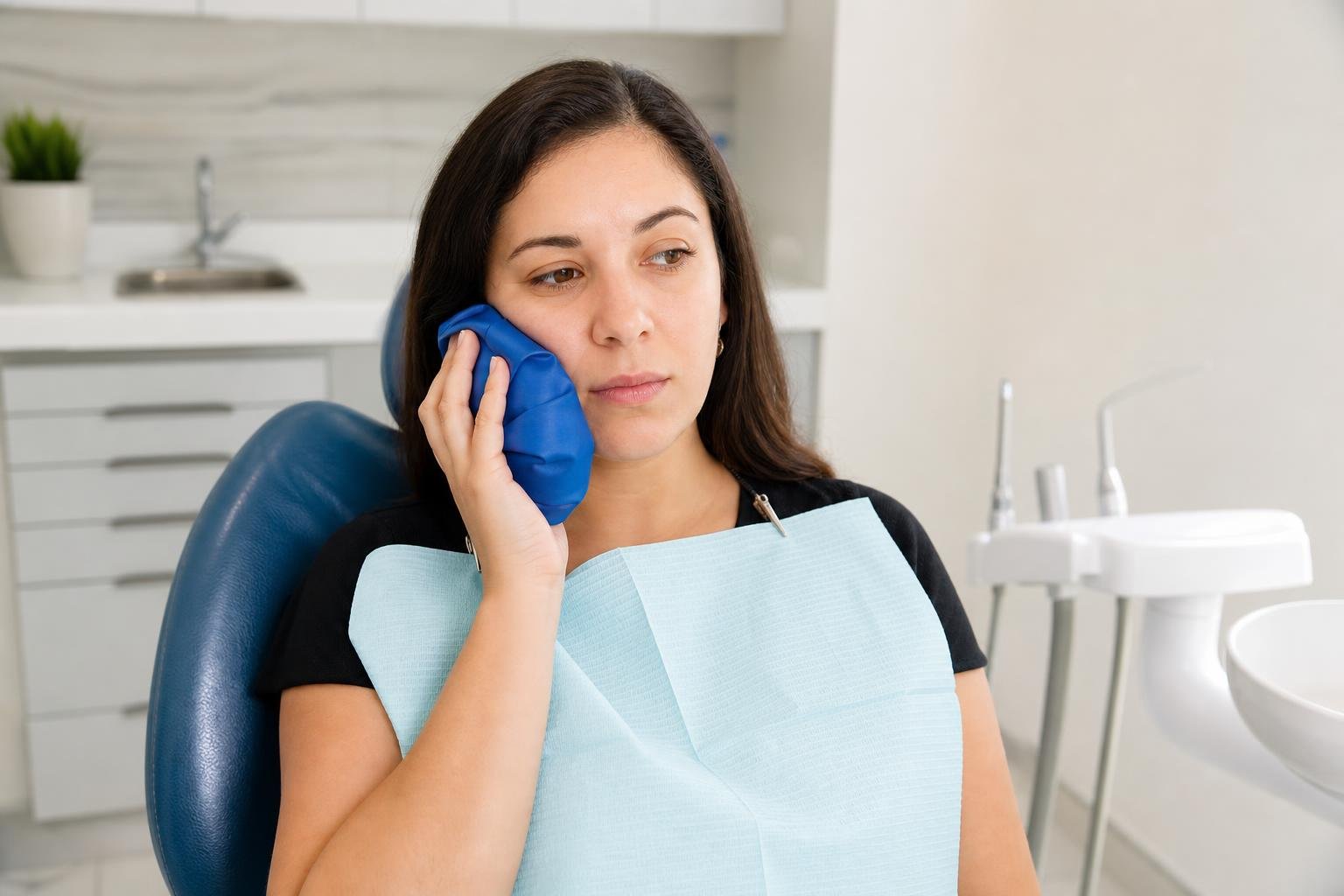
Imagine leaving your dentist's office feeling fine, grabbing a quick meal — and accidentally biting your lip or tongue. While severe injuries requiring medical attention are rare, painful self-inflicted bites and soft tissue damage happen more often than you'd think.
The problem isn't the food. It's the absence of sensation. When you can't feel your lips, cheeks, or tongue, your brain loses the feedback it needs to chew safely. Hot things don't feel hot. Sharp bites don't register. And by the time the numbness wears off, the damage is already done.
This guide walks you through everything you need to know — from how long numbness lasts to exactly what to eat and when.
I'm Dr. John Hegazin, owner of Bradenton Implants and Smile Center, with over 8 years of experience performing restorative and surgical dental procedures — including the exact treatments that leave patients wondering can you eat when your mouth is numb from the dentist. I've seen how the right post-procedure guidance makes recovery faster and safer, and I'll share that guidance with you here.
The Real Risks: Can You Eat When Your Mouth Is Numb From Dentist Visits?
When we administer local anesthesia, our goal is to block pain signals so you can sit comfortably through your treatment. However, this temporary sensory block doesn't just stop pain; it also halts your mouth's protective reflexes. According to research on Local Anesthesia in Dentistry: Risks and Side Effects | Healthline, local anesthetics temporarily disrupt motor coordination and sensory feedback in your jaw, tongue, and lips.
If you try to eat while still under the influence of these numbing agents, you expose yourself to several serious hazards:
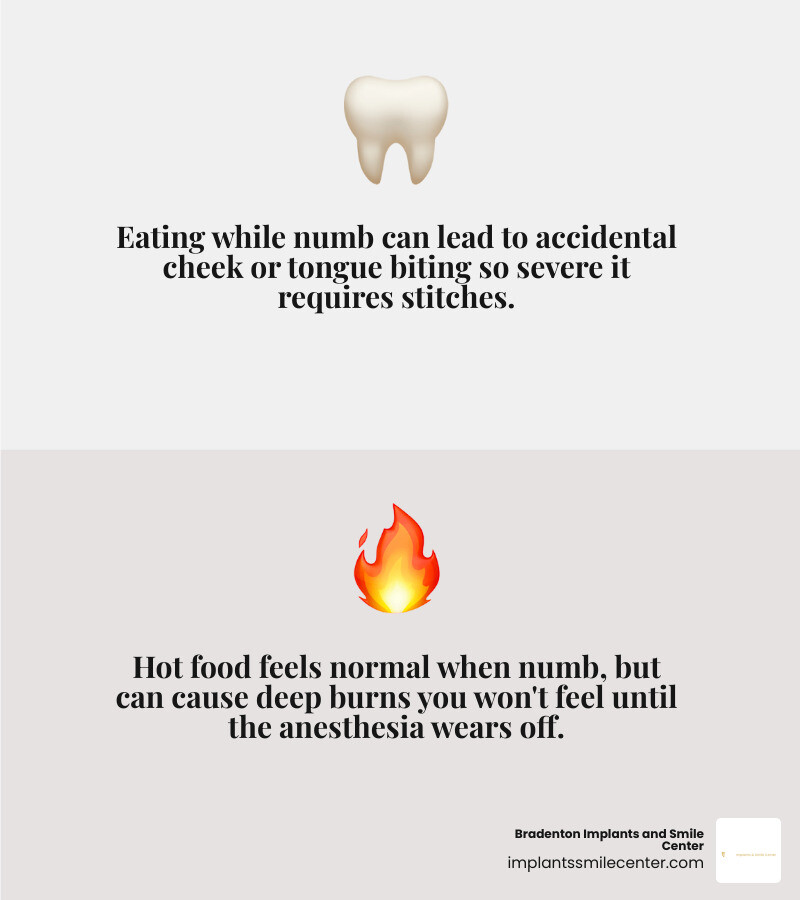
Severe Self-Injury: Without sensory feedback, your teeth can easily slice into the soft tissues of your inner cheeks, lips, or tongue.
Thermal Burns: Your mouth cannot accurately detect extreme heat. Sucking down hot coffee or eating hot soup can result in severe mucosal burns on your gums and palate without you realizing it until hours later.
Choking Hazards: Anesthesia can impair your normal airway protection reflexes in the throat. This makes swallowing highly uncoordinated, creating a genuine choking risk—particularly for young children and elderly patients.
Damage to New Dental Work: Chewing hard foods before your sensory coordination returns can cause you to apply excessive, uneven pressure, potentially fracturing or dislodging fresh dental restorations.
To understand the full scope of these risks, you can read more about what happens physiologically in Can You Eat With a Numb Mouth? Risks & What to Know - Biology Insights.
Why You Must Wait: Can You Eat When Your Mouth Is Numb From Dentist Procedures?
The primary reason we tell you to wait to eat after a procedure like a Local Anesthesia Root Canal is that your teeth are incredibly strong, and your soft tissues are incredibly delicate. When you chew, your jaw exerts massive force. Normally, if your tongue or cheek gets in the way, your nerves instantly signal your brain to stop biting down.
When you are numb, that protective loop is entirely broken. You could severely bite your lip or cheek, causing painful wounds and swelling, and not feel a single thing until the anesthetic wears off.
The Danger of Partial Sensation Recovery
Many patients make the mistake of eating when they feel the anesthetic beginning to fade. However, partial numbness resolution is actually the most dangerous phase.
Because you can feel some pressure, you assume you are safe to chew. In reality, your fine motor coordination is still heavily compromised. Your tongue and cheeks are still lagging behind your jaw movements, making accidental tissue bites and swallowing difficulties highly likely.
How Long Does Dental Numbness Last?
How long you remain numb depends largely on the type of procedure you had, the specific anesthetic used, and your individual metabolism. Generally, local anesthetics keep your mouth numb for 2 to 4 hours, but some deeper block injections can last up to 6 hours.
Dental Procedure | Typical Numbness Duration | Safe Window Before Chewing Solid Foods |
|---|---|---|
Simple Filling | 1 to 2 hours | 2 hours |
Deep / Complex Filling | 2 to 3 hours | 3 hours |
Root Canal Therapy | 2 to 4 hours | 4 hours |
Simple Tooth Extraction | 3 to 5 hours | 24 hours (soft foods only) |
Wisdom Tooth / Surgical Removal | 4 to 6 hours | 24 to 48 hours (soft foods only) |
To learn more about the scientific factors that influence how long these drugs remain active in your system, check out Dental Anesthesia: Types, Side Effects & Recovery | Cleveland Clinic as well as How Long Does Dental Numbness Last After an Injection? | Horwich Dental Care.
Generally, lower jaw injections (mandibular blocks) last longer and feel much "heavier" than upper jaw injections. This is because we must target the main nerve trunk supplying the entire lower jaw, which also numbs half of your tongue and lower lip.
The Timeline: Can You Eat When Your Mouth Is Numb From Dentist Anesthesia?
If you have just undergone a restorative procedure like those discussed in our guide to Stress-Free Root Canals, you can expect the numbness to peak during the first hour and gradually taper off over the next few hours. Active inflammation or swelling in your gum tissue can sometimes alter how numbness feels and potentially extend its duration.
Modern Anesthetic Delivery and Reversal Agents
At Bradenton Implants & Smile Center, we prioritize your comfort and recovery time. Modern dental technology has introduced computer-controlled local anesthetic delivery systems, like "The Wand." This system uses computer-controlled flow rate technology to carefully meter out a highly targeted dose of anesthetic at a slow, steady rate through an incredibly fine needle. The result is a much faster recovery time and significantly less post-operative drooling or numbness.
If you are particularly anxious about needles or prolonged numbness, we invite you to explore our Advanced Sedation Options. Additionally, ask us about phentolamine mesylate injections—a modern dental anesthesia reversal agent that can cut your recovery time in half, allowing you to Eat After Local Anesthesia Wears Off: 7 Safe Timing & Best Foods much sooner.
Safe Eating Strategies and Food Choices After Dental Work

If you absolutely must eat before the numbness has completely resolved (for example, if you are diabetic and need to manage your blood sugar), you must take extreme precautions. Following the guidance in Eating After Dental Work: Safe Foods and Tips | Colgate Oral Care, we recommend implementing these physical "hacks":
The Mirror Trick: Sit in front of a mirror while eating. Since you cannot feel your lips or cheeks, visual feedback is your only way to ensure your tongue and soft tissues are safely out of the way of your teeth.
Spoon vs. Fork: Use a spoon instead of a fork. A spoon provides much better physical control and prevents you from accidentally poking your numb gums or palate.
Chew on the Unaffected Side: Keep all food strictly on the side of your mouth that did not receive anesthesia.
To help you decide when and how to transition back to eating, follow this simple decision-making process:

Best Foods to Eat Once Numbness Resolves
Once your sensation has fully returned, start with soft, easy-to-chew foods that require minimal effort. Excellent choices include:
Scrambled eggs (lukewarm)
Greek yogurt or pudding
Mashed potatoes or sweet potato puree
Smoothies (eaten with a spoon, not a straw)
Lukewarm broths or soups
Foods and Drinks to Strictly Avoid
During the initial recovery phase, steer clear of items that could irritate your gums or damage your new dental work:
Hot Coffee or Tea: Can cause severe thermal burns while you are numb, and can irritate sensitive tissues even after sensation returns.
Crunchy Chips and Popcorn: Sharp edges can puncture healing gums or get lodged under the gumline.
Sticky Candy: Can pull out new fillings or crowns.
Acidic Foods (Citrus, Tomatoes): Can cause intense burning on newly exposed or sensitive tooth surfaces.
Using Straws: The suction force created by using a straw can dislodge healing blood clots after an extraction, leading to a painful condition known as dry socket.
Procedure-Specific Eating Guidelines and Pediatric Precautions
Your post-treatment diet also depends heavily on the specific procedure you received. For example, modern tooth-colored composite fillings are fully cured and hardened by a special blue light during your appointment. This means the material itself is ready for chewing immediately; any delay in eating is purely to let the anesthesia wear off.
In contrast, older silver amalgam fillings require up to 24 hours to fully set up and harden. If you have an amalgam filling, you must avoid chewing directly on that tooth for at least a day, even after your numbness fades.
If you have undergone a tooth extraction, you must wait at least 24 hours before eating solid foods, sticking strictly to cool, soft liquids and purees to protect the healing socket.
Pediatric Considerations After Local Anesthesia
Special care must be taken with children who have received local anesthesia. Children often find the sensation of a numb lip or tongue fascinating. Out of sensory curiosity, they frequently chew, bite, or suck on their numb tissues, causing painful injuries and swelling that they won't realize they've caused until hours later when the numbing wears off.
Sensation Testing: Personally test your child’s sensation by gently touching their lip or cheek before allowing them to eat. Do not simply rely on their verbal confirmation.
Pre-prepare Soft Foods: Have cool applesauce, yogurt, or pudding ready to go before you return home.
Constant Supervision: Keep a close eye on your child until the numbness has completely resolved to prevent them from biting themselves.
What to Do in Case of Complications
If you or your child accidentally bite a lip or cheek while numb, rinse the area gently with warm salt water to keep it clean. Avoid spicy, salty, or highly acidic foods that will sting the wound.
If you experience prolonged numbness that lasts longer than 6 to 8 hours, or if an accidental bite is bleeding heavily and won't stop, contact us immediately. We are always ready to assist you with Dental Emergencies at our Bradenton office.
Frequently Asked Questions About Eating After the Dentist
Can I drink water while my mouth is still numb?
Yes, you can carefully sip plain, room-temperature water while your mouth is still numb. Avoid extremely cold or hot water, and do not use a straw. Take small, controlled sips to prevent choking or spilling.
What should I do if my child bites their lip after dental work?
Gently clean the area with cool water. If there is bleeding, apply light pressure with a clean piece of gauze. You can apply a cold compress to the outside of their cheek to reduce swelling. If the bite is deep or continues to bleed, call our office for advice.
Why does the dentist tell me not to eat or drink for 30 minutes after a cleaning?
If you received a professional fluoride treatment or varnish during your cleaning, we ask you to wait 30 minutes before eating or drinking. This gives the fluoride ample time to absorb into your tooth enamel without being wiped away. Additionally, your teeth may be temporarily sensitive to temperature after a deep cleaning.
Conclusion
At Bradenton Implants & Smile Center, we believe that exceptional dental care extends far beyond the time you spend in our chair. Whether you are visiting us for a routine cleaning, restorative fillings, or looking into Sedation Dentistry Bradenton FL to help with Dental Anxiety Solutions, your safety and comfort during recovery are our top priorities.
If you are planning an upcoming procedure, such as dental implants under IV Sedation Dental Implants, our compassionate team will provide you with clear, personalized post-operative instructions.
Ready to experience high-quality, personalized dental care in Bradenton, FL? Schedule a consultation for a root canal or restorative treatment with our friendly team today at our convenient office located at 7270 55th Ave E, Bradenton, FL 34203. Let us help you keep your smile healthy, beautiful, and completely drool-free!